The importance of interpersonal communication

In a typical working day, you probably communicate regularly with one or even all of the following groups of people: customers, clients, co-workers (including superiors, subordinates and colleagues), suppliers, representatives from other companies, even competitors. The teamwork necessitated by the complexity of today’s workplace has placed increased importance on employees’ interpersonal skills. Such teaming of individuals brings together diverse groups who may not share common norms, values, or vocabularies, but who do offer unique expertise, insights, and perspectives. Add to that the fact that interpersonal skills in the Digital Age are more complex than they have ever been in the past.
E-mail, voice mail, audio conferencing and video conferencing, and the myriads of other technologies that enable individuals to communicate with each other, not only increase the ways in which individuals can interact but also require a heightened sensitivity to the nuances of interpersonal interactions. According to research, lack of interpersonal skill is one of two primary reasons executives fail. The other is inability to change and adapt. You have probably also experienced that 80% of all problems in the workplace can be traced back to communication breakdown. Therefore, one of the greatest leadership skills you, as a manager, can develop, is your ability to communicate well. We also rarely see anyone make it to the top who is inarticulate, therefore we need to learn to communicate effectively if we want to advance in our careers.
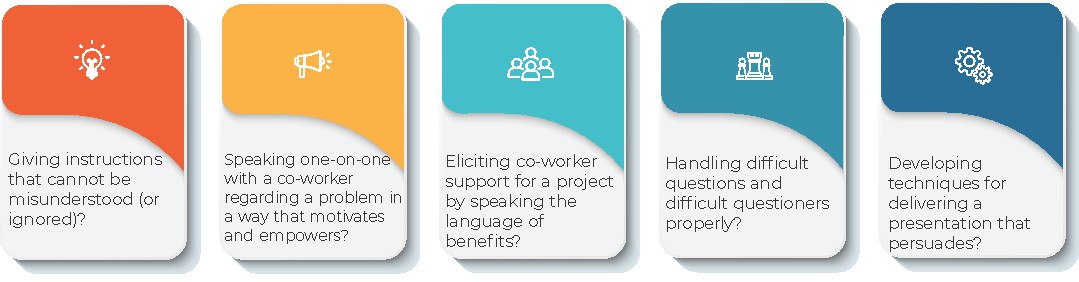
So, how do we communicate effectively, making sure that we are:
Each form of communication draws on different skills, each requires different approaches and sometimes even a different lexicon and that presents a challenge to the majority of South Africans, as very few of us are mother-tongue speakers of English.